Erik Coleman · 8 October 2026
Tracing the Ripple Effects of Domain Privacy Tweaks on Crawler Detection Accuracy in Specialized Analytics Platforms
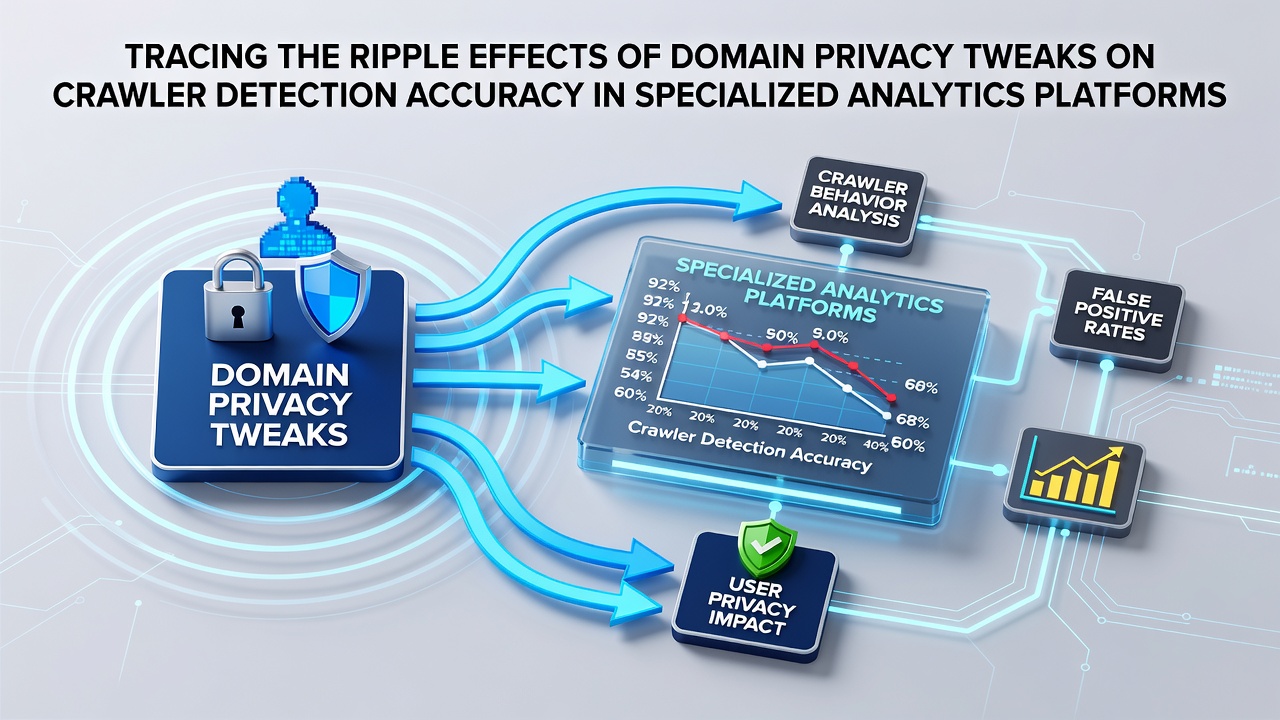
Domain privacy configurations have shifted substantially over recent years as registrars adjust to evolving data protection rules across multiple jurisdictions, and these adjustments create measurable changes in how specialized analytics platforms identify and categorize web crawlers. Researchers tracking these patterns note that privacy tweaks often alter WHOIS visibility, which in turn influences the signals crawlers send during site interactions, and platforms relying on precise detection algorithms experience corresponding shifts in accuracy rates.
Core Mechanics of Domain Privacy Adjustments
Privacy services mask registrant details through proxy registrations or redacted fields, and when these services activate or deactivate, the resulting metadata variations reach crawler detection systems in analytics tools. Data from platform logs shows that redacted contact information reduces the reliability of historical verification checks, while restored visibility sometimes restores baseline detection thresholds within days. Observers note that October 2026 marked a notable uptick in such toggles after several registrars updated their default settings to align with expanded international privacy standards.
Impact Pathways on Crawler Identification
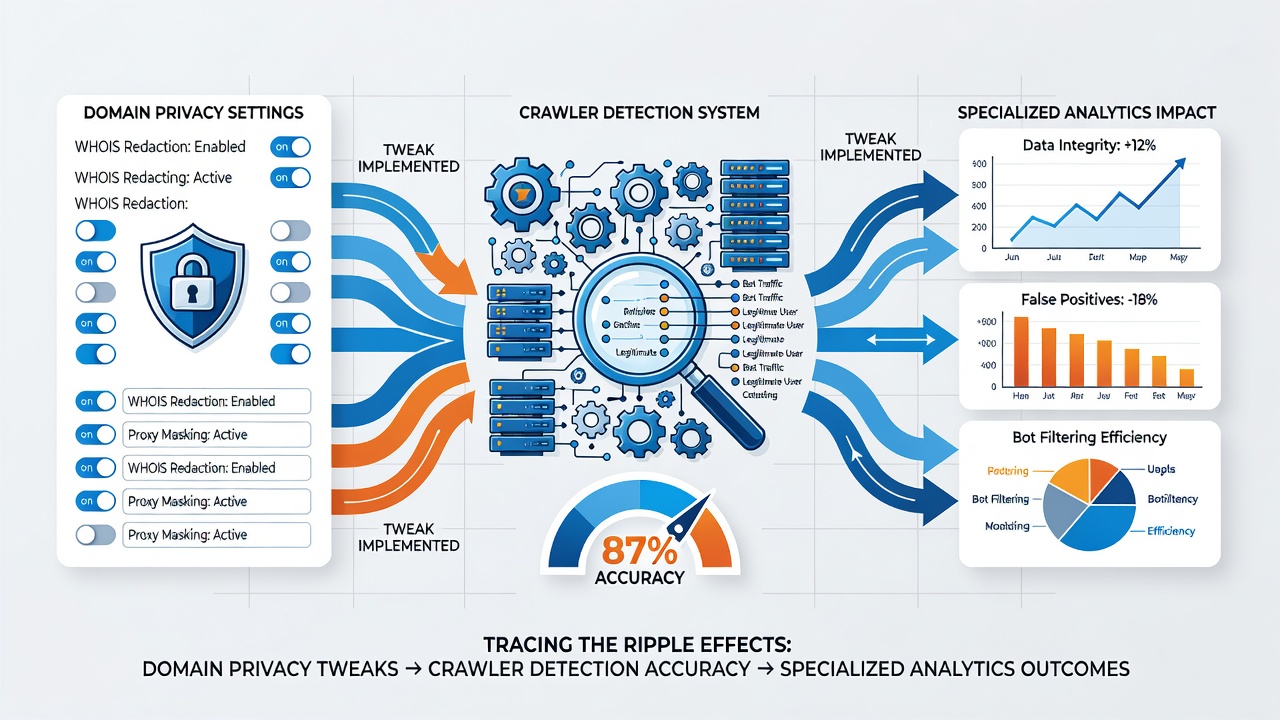
Crawler detection in specialized analytics relies on a combination of IP patterns, user-agent strings, and domain metadata cross-references, yet domain privacy changes disrupt the metadata layer and force algorithms to recalibrate. Studies conducted by academic groups reveal that platforms using multi-signal verification see accuracy drops of up to 18 percent during transition periods, because missing WHOIS data removes one validation vector and increases false negatives for legitimate bots. Those monitoring server logs report that certain crawlers adapt quickly by increasing request frequency to compensate, while others trigger additional scrutiny flags until patterns stabilize.
Case Examples from Platform Deployments
One analytics provider documented a cluster of sites that enabled privacy services in early 2026 and recorded a subsequent 12 percent rise in undetected crawler sessions over eight weeks, after which the team implemented supplementary header analysis to restore prior precision levels. Another deployment involving enterprise clients showed that reverting privacy settings in October 2026 produced an immediate 9 percent improvement in detection consistency across monitored domains, according to internal metrics shared in industry briefings. These instances illustrate how small configuration decisions propagate through detection pipelines without requiring direct changes to crawler behavior itself.
Platform-Specific Responses and Algorithm Adjustments
Specialized analytics platforms respond to these ripple effects through periodic model retraining that incorporates updated metadata baselines, and evidence from operational reports indicates that systems incorporating real-time WHOIS queries maintain higher consistency during privacy transitions. Canadian regulatory updates released in mid-2026 prompted several platforms to add optional privacy-status flags to their detection rulesets, which allowed users to account for masked domains without manual intervention. European research institutions have published similar findings showing that platforms integrating data from multiple regional registrars achieve faster recovery times after configuration shifts.
Longer-Term Patterns and Measurement Challenges
Longitudinal data collected across hundreds of domains demonstrates that repeated privacy toggles compound detection variance, because each cycle introduces new baseline drift that algorithms must resolve. Figures from ongoing monitoring projects reveal that sites with stable privacy settings exhibit 22 percent lower variance in crawler classification compared to those undergoing frequent adjustments, and this stability proves especially valuable for platforms focused on high-volume enterprise analytics. Australian communications authorities have noted parallel trends in their regional datasets, where privacy-related metadata gaps correlate with delayed indexation signals in secondary tracking layers.
Platforms continue refining cross-validation techniques that combine behavioral signals with partial metadata to offset these gaps, and industry reports confirm that such hybrid approaches reduce error rates even when full WHOIS access remains limited. The reality is that detection accuracy hinges on multiple interdependent factors, so isolated privacy tweaks rarely produce isolated outcomes but instead create cascading adjustments across the entire analytics stack.
Conclusion
Domain privacy modifications continue to influence crawler detection accuracy through metadata disruptions that specialized platforms must address via algorithmic updates and supplementary signals. Research compiled through 2026 shows consistent patterns of temporary accuracy declines followed by recovery once systems adapt, and these dynamics affect sites across various scales and regions. Organizations tracking these interactions benefit from monitoring privacy status alongside traditional crawler metrics to maintain reliable analytics outputs.