Gisela Griffin · 10 September 2026
Examining How DNS Configuration Shifts Influence Crawler Prioritization in Evolving Site Structures
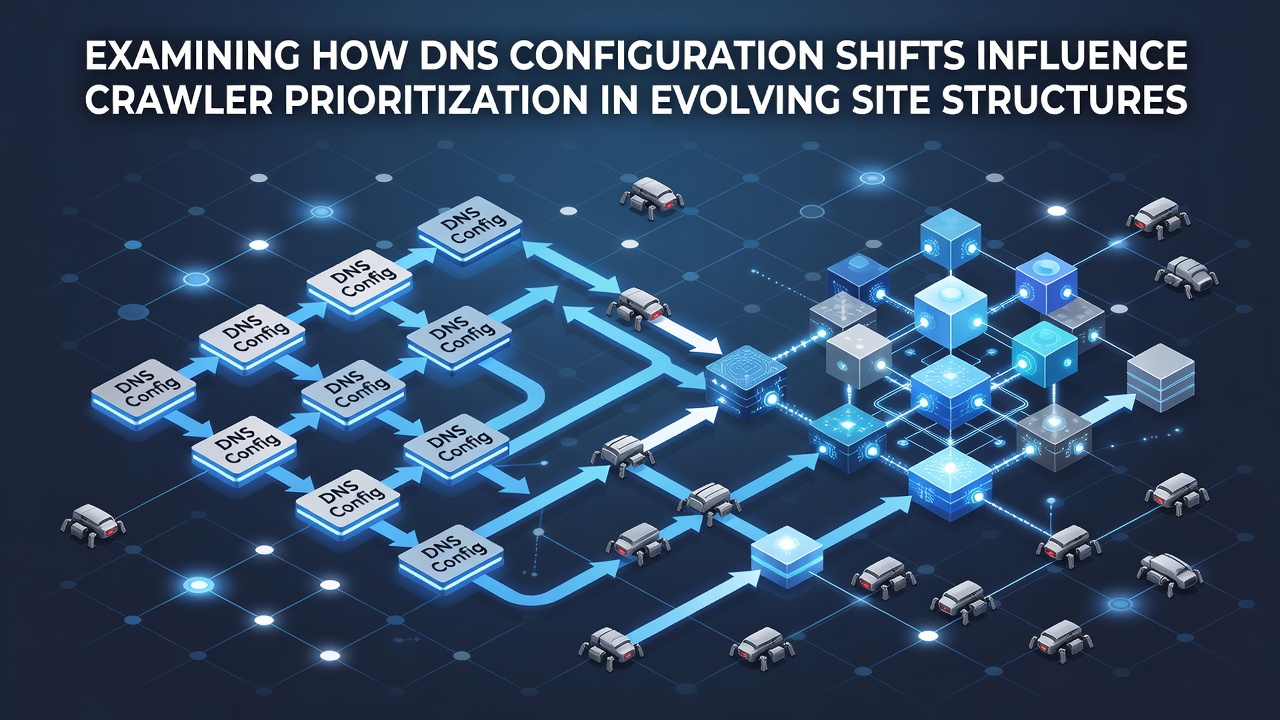
Site structures evolve through redesigns, migrations and content expansions, yet DNS configuration shifts often determine how quickly crawlers detect and prioritize new or relocated pages, since record changes control propagation speed and resolution accuracy across global networks.
Researchers tracking these interactions have noted that TTL values set on A and CNAME records directly affect the interval between a structural update and teh next successful crawl, while shorter TTLs allow faster propagation but increase query loads on authoritative servers during transition periods.
DNS Mechanics in Crawler Operations
Crawlers rely on DNS resolution to locate server IP addresses before fetching content, and when administrators modify records to support new site architectures, the time required for those changes to reach distributed resolver caches creates windows where old paths remain active and new ones stay undiscovered. Data collected from monitoring platforms indicates that propagation delays average between thirty minutes and four hours depending on TTL settings, and this lag influences how search engines allocate crawl budget across large domains undergoing reorganization.
Studies conducted by network observatories show that crawlers apply prioritization algorithms sensitive to response freshness, so pages behind recently altered DNS entries receive lower initial priority until resolution stabilizes and consistent HTTP responses confirm the updated structure. Observers note that this mechanism prevents wasted resources on transient errors while still allowing sites with stable configurations to maintain higher crawl frequencies.
Effects During Structural Evolution
When organizations implement new navigation hierarchies or migrate content to different subdomains, DNS adjustments frequently accompany the move, and researchers have documented cases where elevated TTL values extended deprioritization periods for weeks because cached resolver data continued pointing to decommissioned servers. One analysis of enterprise migrations revealed that sites maintaining TTLs below three hundred seconds achieved indexing of relocated pages up to sixty percent faster than those using default twenty-four-hour values, although the lower settings required additional server capacity to handle increased query volumes.
But here's the thing: evolving sites also introduce additional variables such as CDN integrations and load-balancing configurations, and each layer adds its own DNS dependencies that crawlers must resolve sequentially before content prioritization occurs. Reports from infrastructure monitoring services indicate that combined DNS and CDN changes in September 2026 correlated with temporary ranking fluctuations across multiple monitored domains, particularly when propagation coincided with major content releases.

Experts tracking these patterns emphasize that CNAME chains used during phased migrations can further complicate prioritization because each additional hop increases resolution time and raises the chance of temporary inconsistencies that crawlers interpret as reduced site reliability.
Observed Patterns Across Different Site Types
Larger publishing platforms undergoing frequent structural updates tend to implement automated DNS management tools that adjust TTLs dynamically based on planned change windows, and figures from industry reports show these adaptive approaches reduce the duration of crawl deprioritization by an average of forty-five percent compared with static configurations. In contrast, smaller sites often retain default record settings, which extends the period during which crawlers continue accessing outdated paths and delays full recognition of new site architectures.
Academic investigations into web graph dynamics have demonstrated that DNS stability serves as a signal within crawler scheduling systems, and domains exhibiting frequent record modifications without corresponding content consistency receive progressively lower priority assignments over successive crawl cycles. Those who've studied this process note that recovery typically requires sustained periods of unchanged DNS responses paired with verifiable content availability before previous prioritization levels return.
According to a report issued by the Internet Society, consistent management of DNS parameters during site evolution supports more predictable crawler behavior across both commercial and informational properties.
Technical Considerations for Configuration Management
Administrators planning structural changes must balance propagation speed against operational overhead, since very low TTL values generate higher resolver traffic while longer values risk extended periods of crawler confusion during transitions. Research indicates that staged rollouts, where DNS changes precede content moves by calculated intervals, allow crawlers to establish new resolution paths before the full structural shift occurs, thereby preserving prioritization continuity.
European Union Agency for Cybersecurity publications on network resilience highlight similar principles when discussing infrastructure updates, noting that predictable DNS behavior contributes to overall web ecosystem stability during periods of organizational change.
Conclusion
DNS configuration shifts exert measurable influence on crawler prioritization whenever site structures evolve, because resolution timing, record consistency and propagation behavior determine how quickly new paths integrate into existing crawl schedules. Organizations that align DNS management practices with anticipated structural updates achieve faster recognition of changes while minimizing temporary disruptions to indexing processes, and ongoing monitoring of resolution patterns continues to provide actionable data for refining these coordination strategies across diverse web environments.